
Neuss, Germany, Sep 1, 2010.
Profil today announced a key personnel change. Dr. Bernd Kuglin, former CEO Business Management, has left Profil. In addition to Public Relations and Marketing, Dr. Kuglin was responsible for the the departments Finance & Adminstration, Quality Assurance, Technical Development and Scientific Affairs. His responsibilities will be taken over by Dr Tim Heise, CEO Clinical Science. who has led Profil since its foundation in 1999.
Neuss, Germany, March 15, 2010.
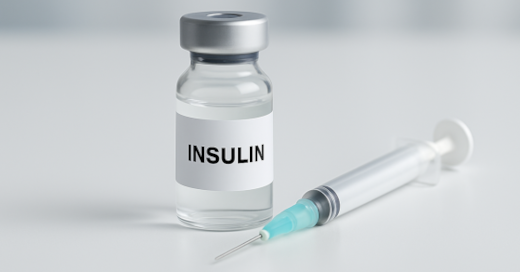
A consortium of academic and industrial partners has announced a collaboration called AP@home that aims to develop an artificial pancreas (AP) that would allow automated glucose control for people with insulin treated diabetes. Normally, insulin is given either by injections or via continuous infusion pumps. However, blood glucose (sugar) levels can be greatly affected by many factors such as diet, physical activity, illness and stress so that it is difficult for patients to judge how much insulin they need.
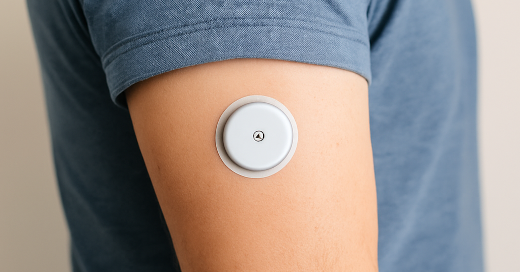
An advanced AP system that combines a Continuous Glucose Monitor (CGM), an insulin infusion pump, and a software algorithm that calculates how much insulin to deliver at any time in response to the blood glucose level could not only improve the quality of life for people with insulin treated diabetes but also reduce the escalating healthcare cost burden.
In the first phase of the AP@home project, the currently available AP algorithms will be tested with CGM systems and insulin pumps already on the market, using a “two-port” approach that requires two skin punctures to attach the glucose monitor and the insulin pump. In this stage, the aim will be to improve the accuracy of the glucose sensors and the safety and effectiveness of the algorithms that relate insulin delivery to blood glucose levels.
In parallel, innovative AP systems will be developed that combine an insulin pump and a CGM system into a single device that uses only one access point through the skin.
In the final year of the 4-year project, the performance of the newly created AP system, including remote monitoring facilities, will be compared with standard intensive insulin therapy in daily life in a multinational controlled trial.
“The aim of this project is to let Europe lead in the development of AP systems”, said project coordinator Lutz Heinemann of the Profil Institut für Stoffwechselforschung GmbH. “Simplified care and improved quality of life for patients with diabetes will diminish related complications and health costs in the long run”, added Heinemann.
The AP@home consortium brings together world-leading experts in the fields of medical device development, clinical studies and modeling & control algorithms, including seven academic partners (Universities of Cambridge, Padova, Pavia, University Hospitals of Amsterdam and Montpellier, Medical University Graz, EPF Lausanne) and five industrial partners (Profil Institut für Stoffwechselforschung GmbH, Triteq Ltd, Sensile Medical AG, STMicroelectronics and 4a engineering GmbH) and is coordinated by Profil Institut für Stoffwechselforschung GmbH, Neuss, represented by Prof. Dr. Lutz Heinemann, who is co-founder and Partner at Profil. The project is funded with a €10.5M grant from the European Commission’s Framework Programme 7
“AP@home offers a tremendous opportunity to advance the development of artificial pancreas systems," said Aaron Kowalski, PhD, scientific director of the Juvenile Diabetes Research Foundation's Artificial Pancreas Project - a program begun in 2005 to drive the development of closed-loop systems by funding and partnering with world-leading academic and industry participants. "The collaboration between researchers in the European consortium and in JDRF's Artificial Pancreas Project will create a global partnership that can dramatically improve the lives of people around the world living with diabetes".
Further information: Lutz Heinemann, lutz.heinemann(at)profil-research.de, +491608877401 (coordinator). www.apathome.eu