Automated glucose clamp techniques
Profil is the largest glucose clamp study center in the world. We have the capabilities to run up to 28 continuous glucose clamps in parallel giving 24-hour coverage 7 days a week. With several thousands of clamp hours per year, we have extensive experience with all the various clamp designs, including the most commonly used hyperinsulinemic euglycemic clamp.
The principles of the glucose clamp procedure
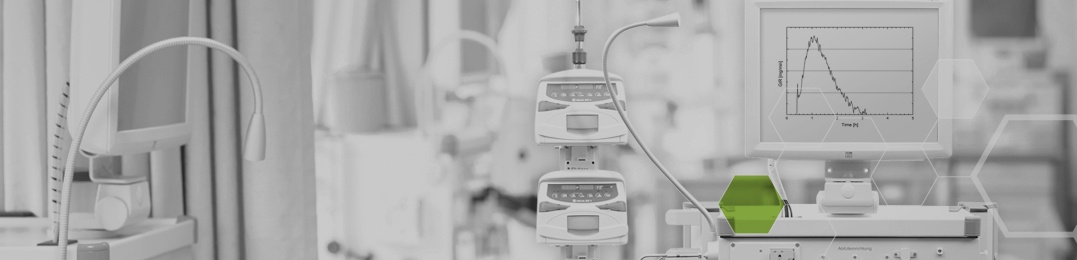
Glucose clamp experiments are characterized by the measurement of the glucose-lowering effect of a compound by means of a variable glucose infusion rate (GIR), so that blood glucose concentrations are maintained or “clamped” at a predefined target level. GIR is used as a surrogate marker for the
pharmacodynamic effect of a glucose-lowering drug, such as exogenous insulin.
A glucose clamp study can be performed manually or with automated glucose clamps. Both techniques require considerable experience to provide reproducible results. The advantage of the automated clamp technique is that it provides continuous glucose monitoring and the possibility to adapt GIR on a minute-by-minute basis, whereas in manual clamps the GIR adjustments are performed less frequently (at 3- to 10-minute intervals).
Developing ClampArt®
In 1979, De Fronzo et al. published the first description of a glucose clamp procedure . The founders of Profil, Tim Heise and Lutz Heinemann have worked for many years on refining the operation of the automated glucose clamp technique, seeking ways to improve the performance of the devices and make the experience easier for clinical trial subjects.
Having lengthy experience with the Biostator, which was developed in the early 1970s by Life Science Instruments, a project team at Profil headed by
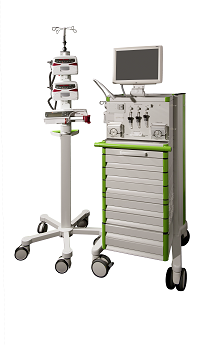
Carsten Benesch developed ClampArt®, a modern glucose clamp device that meets all EU regulatory standards. Its CE-certification was awarded in 2013. The state-of-the-art technology uses of modern sensors and infusion pumps to provide improved quality and utility. Confounding factors like disturbances in blood flow are taken into account and automatically corrected based on continuous determination of blood glucose and the blood dilution factor. ClampArt
® provides more reliable blood glucose results than the Biostator and has more refined
GIR calculation algorithms, meaning better reduction of blood glucose and GIR fluctuations.
Profil is renowned for expertise and competence in the assessment of the glucodynamic activity of all kinds of insulin formulations. The exact clamp design is carefully adapted to the study objectives and the compound studied, even if this means using ultra-long clamps with a duration of 52 hours. Due to the unrivalled clamp quality achieved with ClampArt® the pharmacodynamic effects of blood glucose-lowering agents can be determined with the high precision and accuracy demanded by EU regulatory authorities, in particular for biosimilar insulins.
Other study objectives require different clamp designs, such as:
- The one- or two-step hyperinsulinemic euglycemic clamp, which is considered the gold standard for the assessment of insulin sensitivity
- The hyperglycemic clamp for the determination of beta-cell function
- The hypoglycemic clamp for the quantification of counter-regulation
- The pancreatic clamp, used to determine the metabolic role of alpha- and beta-cell hormones, among other things.
Read more about
2-step insulin sensitivity clamp in our factsheet
here.
Metabolic fluxes can also be assessed when combining glucose clamps with the isotope dilution technique using, for example, [6.6-
2H
2]-glucose to assess endogenous glucose production, or [1.1.2.3.3]-
2H
5-glycerol to determine lipolysis.
Other glucose clamp techniques at Profil
In addition to these clamp techniques, our expert teams can perform evaluations of oxidative and non-oxidative glucose disposal (using indirect calorimetry); fat oxidation assessments using [1-13C]-oleate and other methods; assessment of adipose tissue lipolysis via microdialysis; and vascular function monitoring during glucose clamp procedures using flow-mediated dilation (FMD), tonometry and/or venous occlusion plethysmography.